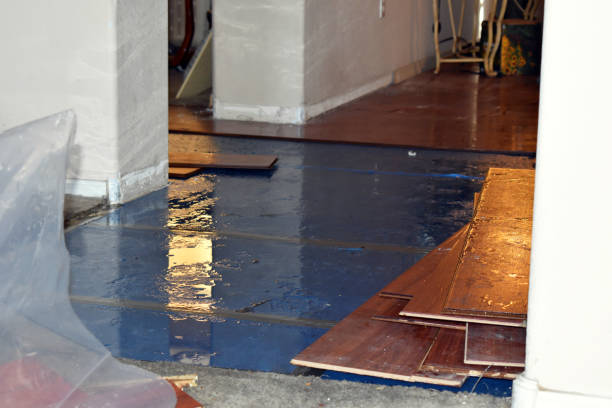
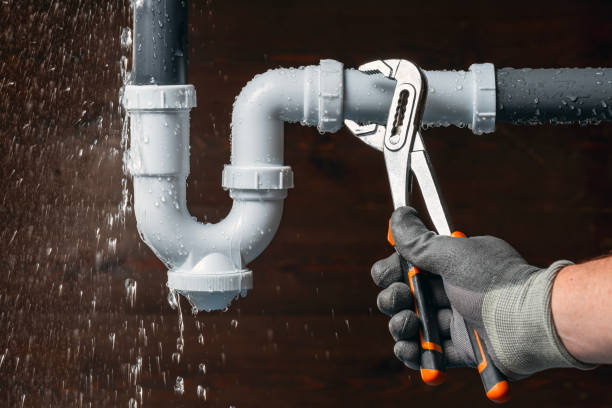
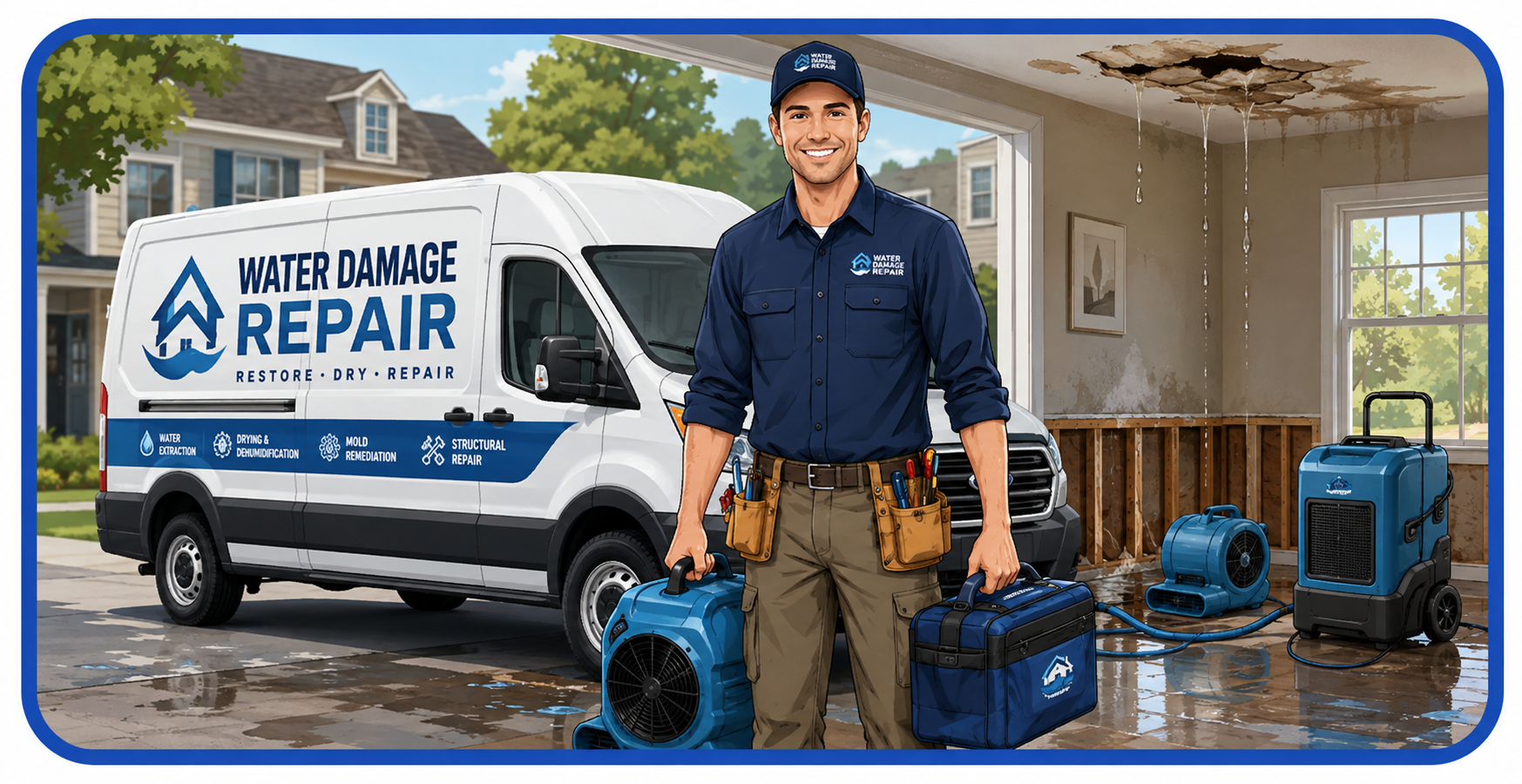
A washing machine hose lets go at 2am and suddenly your Plymouth Meeting laundry room is underwater — that's the exact moment our dispatch line is built for, with a technician routed before you've finished mopping the first puddle.
Call +1-844-578-1604
Avg. arrival under 60 minutes in Plymouth Meeting
Written estimate, no hidden line items
Licensed & insured, verifiable on request

We run our Plymouth Meeting operation on IICRC-certified technicians and commercial-grade equipment, not a subcontractor list we pull from when the phone rings.
Our Plymouth Meeting dispatch desk is staffed around the clock by people, not an automated queue, which matters most at exactly the hour you're calling.
Homeowners dealing with a flood are stressed enough without technical jargon, so we train our crews to explain the process in plain terms from the first phone call.
Not every water problem announces itself with a flooded floor. Most start quietly, and catching one of these signs early is usually the difference between a same-day fix and a much bigger repair.
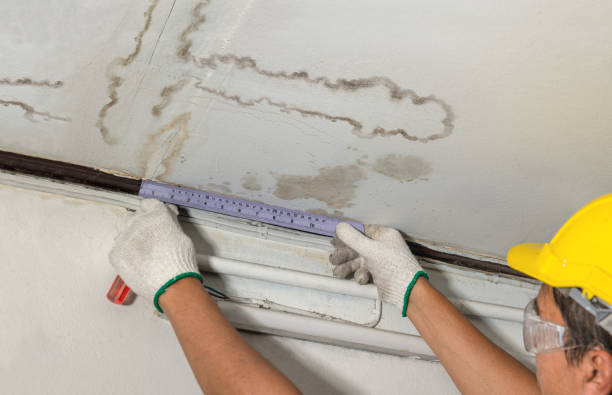
A ring that reappears within weeks of a fresh coat of paint means the moisture source is still active, and it's usually a plumbing line, not a roof issue, especially near bathrooms.
If a dehumidifier and open windows don't clear the smell within a day or two, there's an active moisture source that ventilation alone won't solve.
Flooring that shifts slightly when you walk on it, even subtly, is worth a moisture reading before it gets worse.
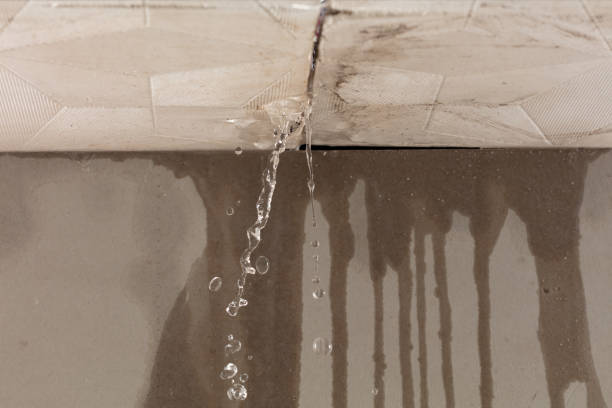
The sound of running water when every fixture in the house is off is one of the more reliable early warnings of a hidden leak.
Wallpaper that suddenly lifts at the seams after holding fine for years often signals a change in the humidity or moisture level inside that wall cavity.
Dark spotting around grout lines or window frames is frequently the first visible sign of a developing moisture problem.
If more than one of these sounds familiar, it's worth a professional moisture check sooner rather than later.
Bouncing between an extraction company, a drying company, and a repair contractor is how small jobs turn into weeks-long headaches — we keep all three under one roof on purpose.
The equipment on our trucks scales up or down to the job, but the process — assess, extract, dry, verify, repair — doesn't change.
Moisture meters classify the water as Category 1, 2, or 3 on arrival, which determines whether it's a straightforward extraction or a full contamination protocol.
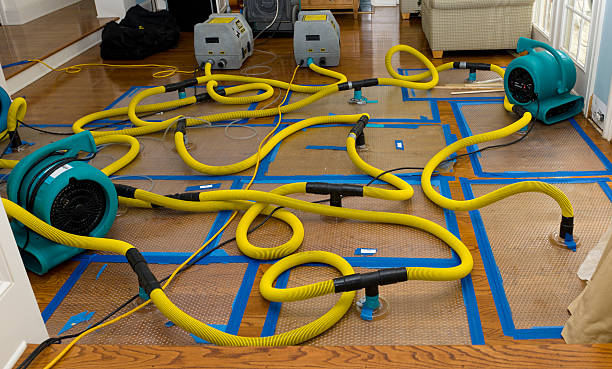
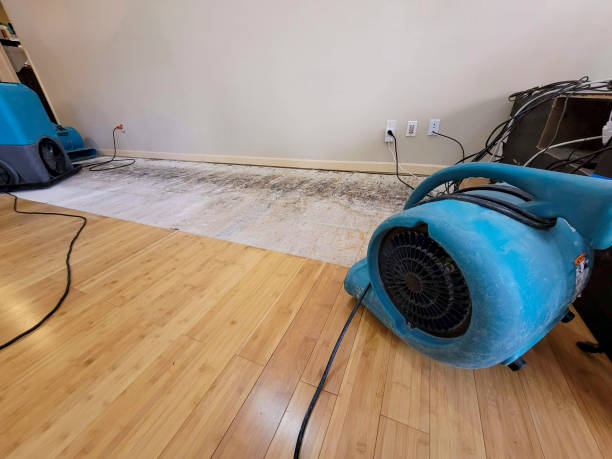
Air movers and dehumidifiers get placed according to psychrometric readings taken at assessment, not a default layout used on every job regardless of conditions.
Our sewage cleanup protocol follows IICRC S500 guidelines start to finish, including isolation of the affected zone and disposal documentation.
If mold has already started, containment with negative air pressure goes up before any demolition begins, so spores don't travel to unaffected rooms.
Reconstruction starts from the actual drying documentation, not a fresh guess, which keeps the repair scope accurate.
Furniture, electronics, and documents get assessed on-site, with salvageable items cleaned and stored while the space dries.


Four steps, no guesswork — here's exactly what happens between your call and a verified-dry structure.
A live dispatcher, not a voicemail tree, takes your call and asks a few quick questions about the source and severity so the crew rolls out prepared.
Moisture meters and thermal cameras trace exactly how far water has traveled, including inside walls and under flooring where it's invisible to the eye.
Equipment placement follows the specific psychrometric numbers from assessment, not a generic pattern used on every job.
Every affected area gets re-tested before we call the job complete — no shortcuts on the sign-off.
None of these four things matter in isolation — it's the combination of licensing, speed, honest pricing, and a real guarantee that actually changes the outcome of a water emergency.
Licensing and insurance aren't paperwork we keep in a drawer; they're what let us stand behind the work if something doesn't go as planned.
Shorter drive times matter most in the first hour after a loss, which is exactly when local staging pays off.
We'd rather have the pricing conversation upfront than after the job's already underway.
If a drying target isn't hit on schedule, equipment stays on-site at no extra charge until the readings confirm it's dry.
If our readings don't hit a safe drying standard on schedule, equipment stays running at our cost until they do — that's the bar we hold ourselves to.
This isn't marketing copy — it's the actual checklist our crews sign off against before a job is marked complete.
Call +1-844-578-1604Our Plymouth Meeting service radius covers 19462, with trucks positioned to reach any address quickly, not just the neighborhoods closest to a single office.
Coverage extends past the city core into the surrounding Plymouth Meeting suburbs, so an outlying address isn't treated as a second-tier call.

"What stood out was how calm the technician stayed while explaining a genuinely stressful situation — that mattered more than I expected."
Renee A., Plymouth Meeting"A storm backed water into our finished basement and the crew classified it, extracted it, and had dehumidifiers running that same afternoon. The invoice matched the quote to the dollar."
Owen D., Plymouth Meeting"They didn't cut corners on the sanitization step even though it clearly slowed them down — with two kids in the house, that mattered to us."
Fatima J., Plymouth Meeting"Fast response and clear pricing, and they handled the back-and-forth with my insurance adjuster directly, which saved me a genuinely stressful week."
Lucas P., Plymouth Meeting"Getting a daily drying log meant we always knew where the job stood instead of a vague verbal update."
Grace T., Plymouth Meeting"Our office flooded overnight and industrial equipment was already running before our staff arrived for the morning shift."
Nathaniel W., Plymouth Meeting"A cracked supply line under our kitchen sink went unnoticed for days, and by the time we called, the subfloor was saturated. They only replaced what actually tested wet, not the whole floor."
Bianca H., Plymouth Meeting"They explained the crawl space drainage issue in plain terms instead of technical jargon, and fixed it on the spot rather than scheduling a separate trip."
Derek S., Plymouth Meeting"They found the actual source of the leak instead of just drying the surface damage, which saved us from the same problem happening again in a month."
Melissa C., Plymouth Meeting"Being out of town when it happened was stressful enough — having a crew that could work directly with our property manager made it manageable."
Victor N., Plymouth Meeting